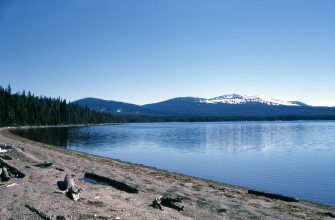
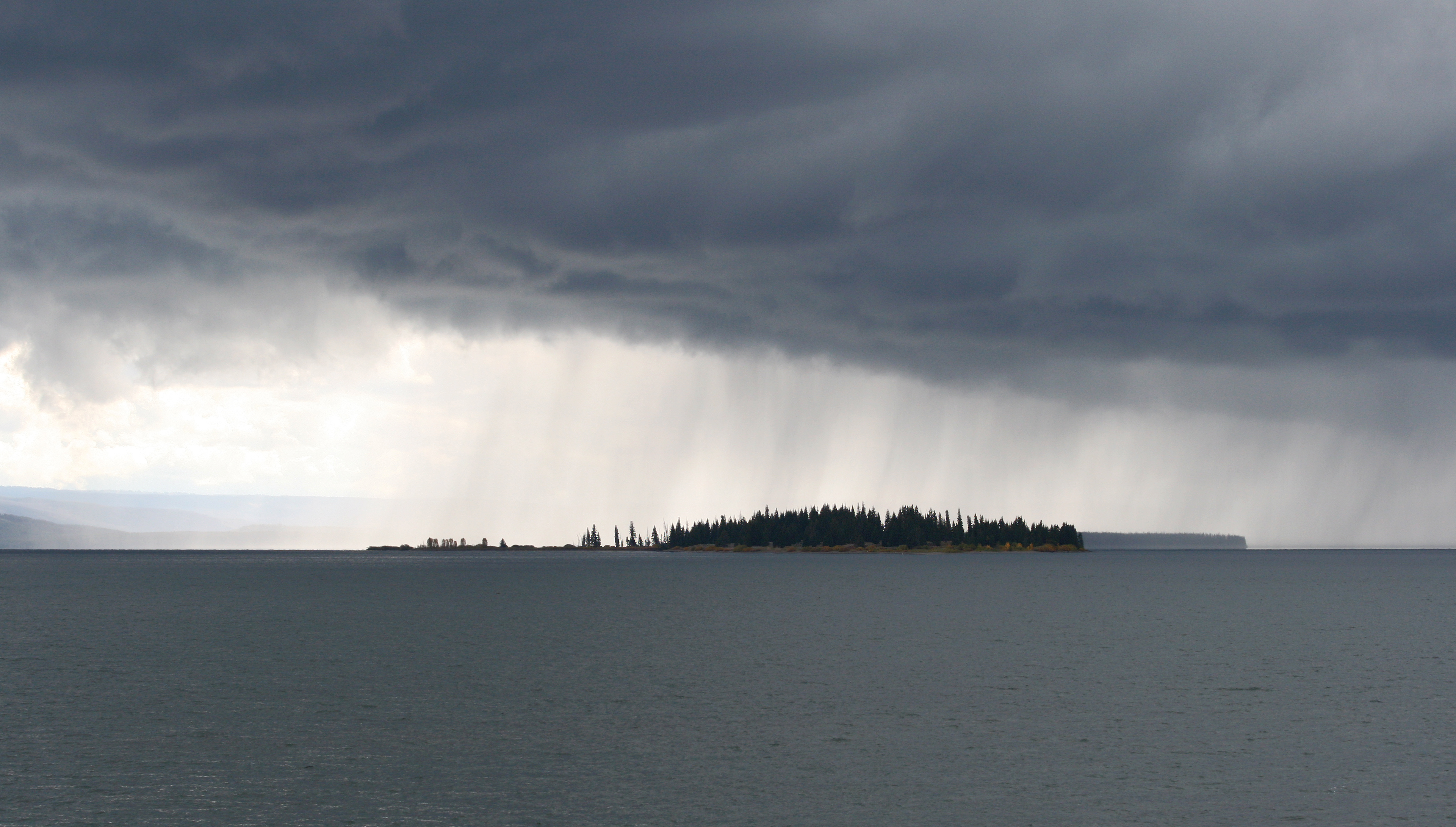
Yellowstone Lake is the wild blue heart of Yellowstone National Park – the largest high-elevation lake in North America, a vast, cold, sapphire sea sitting at 7,733 feet above sea level. Covering about 132 square miles with 141 miles of wild shoreline, it’s a lake of superlatives: a native cutthroat trout stronghold, a window into the restless Yellowstone supervolcano beneath it, and one of the most beautiful and dangerous bodies of water in the American West.
This guide covers Yellowstone Lake in full: the geology and the caldera, the famous cutthroat fishing and the lake-trout battle, boating and the marina, the wildlife and thermal features, and how to visit safely. It’s part of our growing Wyoming Lakes Database.
- Yellowstone Lake at a glance
- A lake on top of a supervolcano
- Cutthroat trout and the lake-trout battle
- Boating, the marina and cruises
- Wildlife and the wild shore
- West Thumb, Lake Village and historic lodging
- Safety: cold, storms and bears
- When to visit
- Getting there and what’s nearby
- Know before you go
- Frequently asked questions
- How big is Yellowstone Lake?
- What fish are in Yellowstone Lake?
- Do you need a Wyoming fishing license for Yellowstone Lake?
- Can you swim in Yellowstone Lake?
- Why is Yellowstone Lake special geologically?
- Can you boat on Yellowstone Lake?
- Where is Yellowstone Lake?
Yellowstone Lake at a glance
- Surface area: ~132 square miles (~87,000 acres) – the largest lake in Yellowstone
- Elevation: 7,733 ft – the largest freshwater lake above 7,000 ft in North America
- Depth: averages ~140 ft, with a maximum around 390 ft
- Shoreline: ~141 miles, mostly wild and undeveloped
- Location: southeastern Yellowstone National Park, Wyoming
- Top fish: native Yellowstone cutthroat trout (catch-and-release); invasive lake trout (must be killed)
A lake on top of a supervolcano
Yellowstone Lake sits partly inside the Yellowstone Caldera – the giant crater of one of the world’s largest active volcanic systems. The lake’s West Thumb is itself a younger volcanic crater, a caldera within the caldera, and along its shore the West Thumb Geyser Basin sends hot springs steaming right into the cold lake. Beneath the surface, scientists have mapped underwater hot springs, hydrothermal vents and rising rock domes – the living, breathing floor of an active volcano. The lake is a place where the deep heat of the Earth meets some of the coldest water in the Rockies.
Cutthroat trout and the lake-trout battle
Yellowstone Lake is the largest inland population of Yellowstone cutthroat trout in the world – a native fish that once filled the lake and fed everything from grizzly bears to bald eagles, otters and white pelicans. That ecosystem was thrown into crisis when lake trout were illegally introduced; the predatory lake trout devastated the cutthroat, and with them the bears and birds that depended on spawning cutthroat in the lake’s tributaries.
The Park Service has fought back with one of the largest native-fish recovery efforts anywhere, gillnetting lake trout by the hundreds of thousands each year to let the cutthroat recover – and it’s working. For anglers, the rules reflect the stakes:
- Yellowstone cutthroat are catch-and-release only – handle gently and let them go.
- Lake trout caught in Yellowstone Lake must be killed – it’s mandatory, to protect the native fish.
- You need a Yellowstone National Park fishing permit (not a Wyoming state license) and must use non-lead tackle and barbless hooks where required.
Fishing Bridge, once famous for anglers shoulder-to-shoulder over spawning cutthroat, is now closed to fishing to protect the fish – you can watch them from the bridge instead.
Boating, the marina and cruises
Boating is a classic Yellowstone Lake experience, but it’s serious business on water this cold and this big. Bridge Bay Marina is the hub, offering boat rentals, guided fishing trips and scenic cruises aboard a tour boat that takes in the shoreline and Stevenson Island. Private boats need a Yellowstone boating permit and an aquatic-invasive-species inspection. Kayakers and canoeists paddle the bays – but the lake’s frigid water and sudden storms make hugging the shoreline essential.
Wildlife and the wild shore
The lake and its surroundings are prime Yellowstone wildlife country. Grizzly and black bears roam the shoreline and tributaries, bison graze the nearby Hayden Valley, and the water hosts otters, bald eagles, ospreys and nesting American white pelicans on the islands. The mostly roadless eastern and southern shores back up to some of the most remote wilderness in the Lower 48 – true grizzly backcountry.
West Thumb, Lake Village and historic lodging
Along the developed northwest shore you’ll find West Thumb Geyser Basin (a boardwalk over hot springs at the water’s edge), Grant Village, Lake Village, and the elegant, butter-yellow Lake Yellowstone Hotel – the oldest hotel in the park, a National Historic Landmark with sweeping lake views. Fishing Bridge has a visitor center and an RV park.
Safety: cold, storms and bears
Yellowstone Lake is genuinely dangerous and deserves respect. The water stays around 41°F (5°C) even in summer – cold enough to cause hypothermia in minutes, and immersion is the leading cause of the lake’s drownings. Winds and storms can build big, sudden waves. And this is grizzly country, so carry bear spray, store food properly and stay alert. Always wear a life jacket on the water, check the forecast, and never overestimate how long you could survive a capsize.
When to visit
The lake typically stays frozen from around late December until late May or early June, and the high country has a short season. Summer (June-September) is the time for boating, fishing and cruises; fall is quieter and beautiful. Park roads near the lake usually open by late spring and close for winter, so check Yellowstone’s seasonal road and opening schedules before you go.
Getting there and what’s nearby
Yellowstone Lake is in the southeastern part of Yellowstone National Park, reached via the park’s Grand Loop Road. The East Entrance (from Cody) and South Entrance (from Grand Teton and Jackson) are closest. The Hayden Valley, the Grand Canyon of the Yellowstone, and Jackson Lake in Grand Teton are all part of the same epic road trip.
Know before you go
- Park permits: fishing needs a Yellowstone permit (not a state license); boating needs a Yellowstone boating permit and an AIS inspection.
- Cutthroat catch-and-release; lake trout must be killed – know the rules.
- Cold water kills: ~41°F year-round – wear a life jacket and stay near shore.
- Grizzly country: carry bear spray and store food properly.
- Short season: the lake is frozen roughly late December to late May; summer is prime.
Frequently asked questions
How big is Yellowstone Lake?
About 132 square miles (~87,000 acres) with 141 miles of shoreline, at 7,733 feet elevation – the largest high-elevation lake in North America.
What fish are in Yellowstone Lake?
Native Yellowstone cutthroat trout (catch-and-release only) and invasive lake trout, which anglers are required to kill to protect the native cutthroat.
Do you need a Wyoming fishing license for Yellowstone Lake?
No – you need a Yellowstone National Park fishing permit instead of a state license. Cutthroat are catch-and-release; lake trout must be kept and killed.
Can you swim in Yellowstone Lake?
It’s not recommended – the water stays near 41°F even in summer, cold enough to cause hypothermia within minutes. Boating is popular, but always wear a life jacket and stay near shore.
Why is Yellowstone Lake special geologically?
It sits partly inside the Yellowstone Caldera, with West Thumb a volcanic crater of its own, and the lakebed hosts underwater hot springs, vents and rising rock domes – it’s a lake atop an active supervolcano.
Can you boat on Yellowstone Lake?
Yes – Bridge Bay Marina offers rentals, guided trips and scenic cruises. Private boats need a Yellowstone boating permit and an invasive-species inspection, and must respect the cold, storm-prone water.
Where is Yellowstone Lake?
In the southeastern part of Yellowstone National Park, Wyoming, reached via the park’s Grand Loop Road from the East (Cody) or South (Jackson) entrances.
Related: explore more of the largest lakes in Wyoming, or head back to the Wyoming Lakes Database.
Explore more Wyoming lakes: the largest lakes in Wyoming and the deepest lakes in Wyoming.